

Florida's Coral Reef
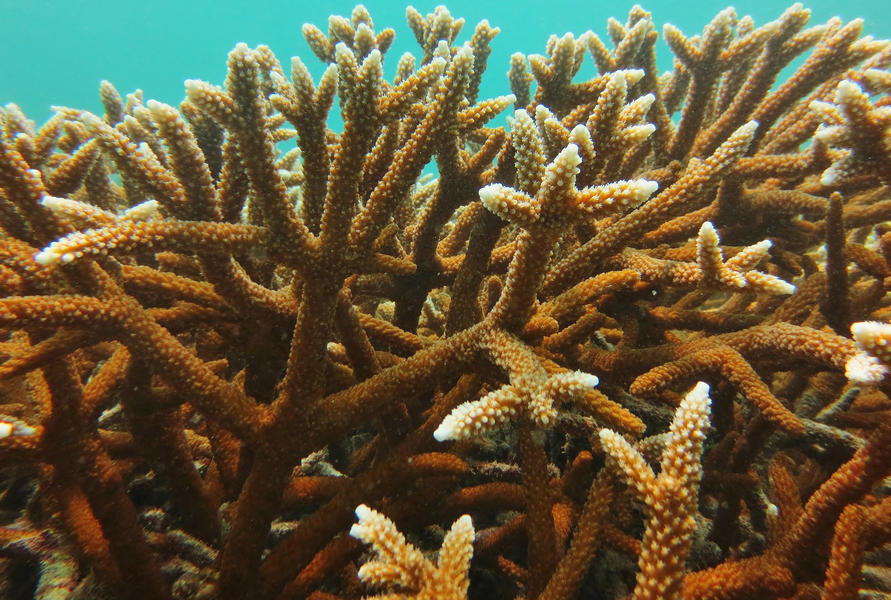
Florida is the only state in the continental United States with extensive shallow coral reef formations near its coasts. Coral reefs create specialized habitats that provide shelter, food and breeding sites for numerous plants and animals. This includes species important to fishing like spiny lobster, snapper and grouper. Coral reefs lay the foundation of a dynamic ecosystem with tremendous biodiversity.
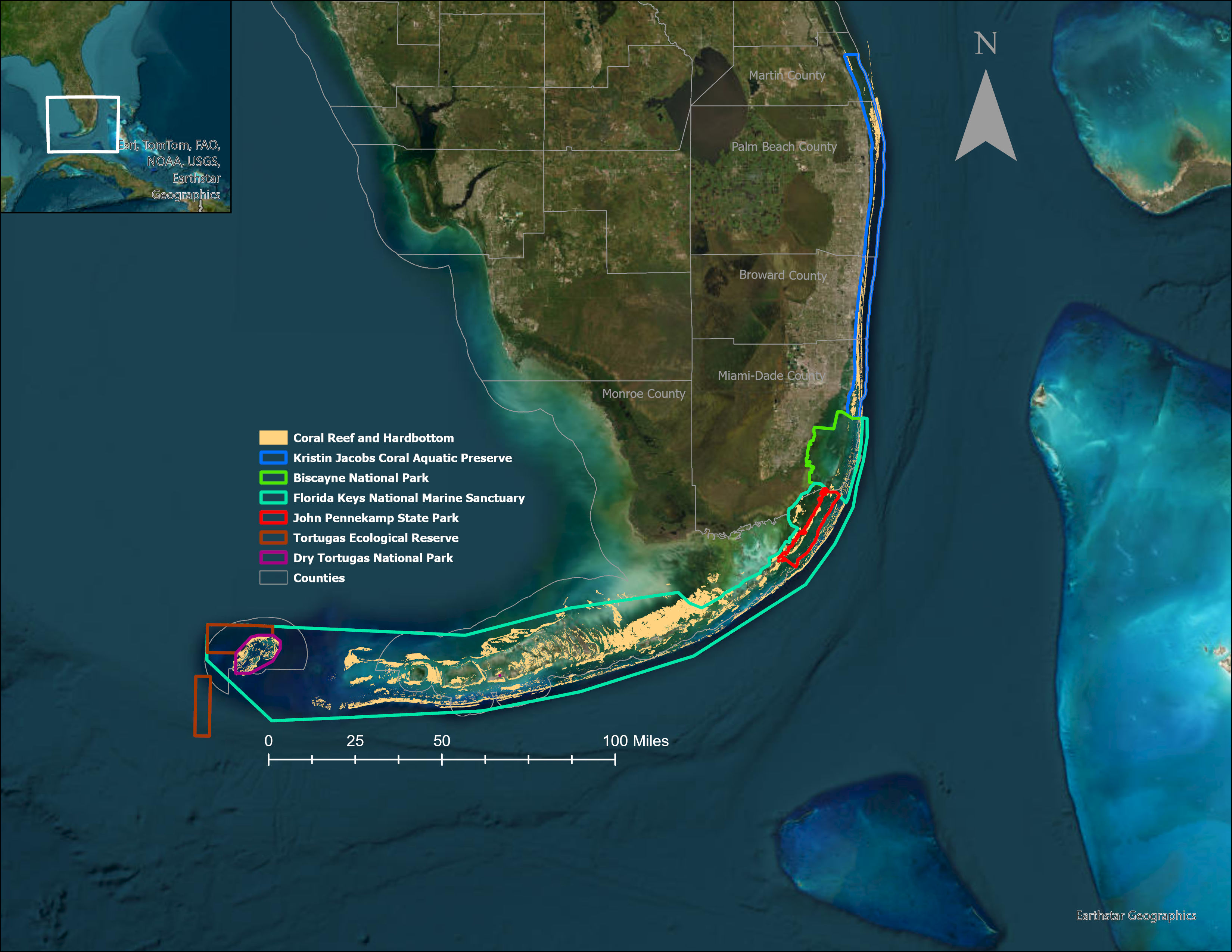
Florida's Coral Reef stretches approximately 350 linear miles from the Dry Tortugas, west of the Florida Keys, to the St. Lucie Inlet in Martin County. This includes Cape Florida Aquatic Preserve, Kristin Jacobs Coral Aquatic Preserve, Coupon Bight Aquatic Preserve, Dry Tortugas National Park, Key West National Wildlife Refuge and Biscayne National Park.
Approximately two-thirds of Florida's Coral Reef lies within the Florida Keys National Marine Sanctuary (FKNMS), a federally designated marine protected area surrounding the Florida Keys island chain. FKNMS is co-managed by the National Oceanic and Atmospheric Administration (NOAA) and the Florida Department of Environmental Protection (DEP).
DEP’s Coral Reef Conservation Program (CRCP) manages the reefs extending north of Biscayne National Park and FKNMS. CRCP gathers input from the Southeast Florida Coral Reef Initiative (SEFCRI), an organized group of local stakeholders, to inform management actions on the northern reefs. On July 1, 2024, this northern third of Florida’s Coral Reef was designated by the Florida Legislature as Kristin Jacobs Coral Aquatic Preserve, which now also encompasses Cape Florida Aquatic Preserve.
Additionally, DEP’s Coral Protection and Restoration Program supports the holistic management of Florida's Coral Reef by guiding national coral reef policy through participation in the U.S. Coral Reef Task Force, providing leadership for coral reef initiatives in the state and by effectively administering state funding for Florida’s Coral Reef priorities including the Florida's Coral Reef Restoration and Recovery Initiative (FCR3).