

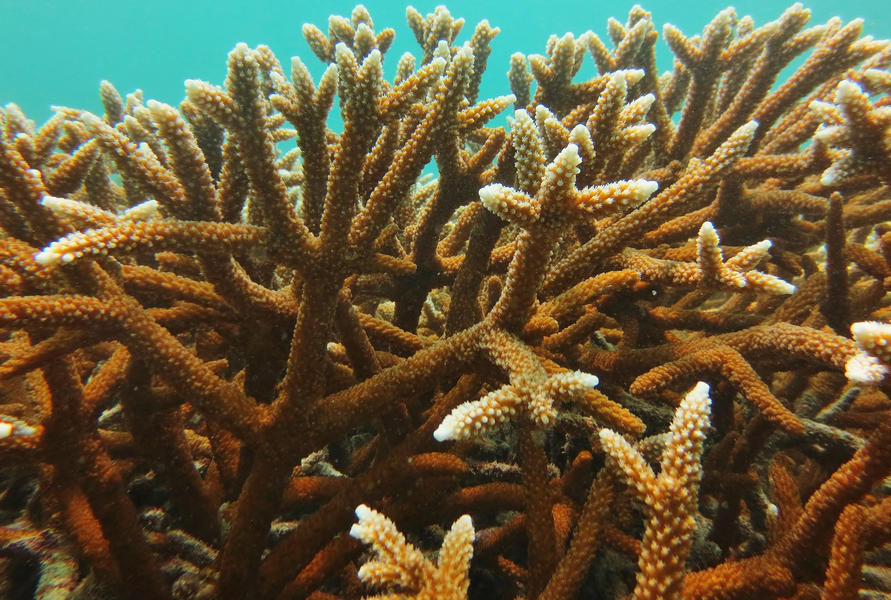
Abiotic Influences Along Southeast Florida Coral Reef Communities II

Statistical analyses of Phase 3 (DEP C3D233) abiotic data (July 2024–May 2025) from coral reef and coastal sites in Southeast Florida examined temperature, salinity, dissolved oxygen (DO), pH, turbidity, pressure, and sedimentation. Sedimentation was highest at 1N and lowest at 3N/2S, peaking (~417 g/day) in Fall 2024. Temperature showed strong seasonality (~22°C winter to ~30°C summer), while salinity was higher at coastal sites and lower nearshore likely due to freshwater input. DO decreased with warming, pH was mostly stable but lower nearshore, and turbidity was generally low with brief offshore spikes. Sedimentation was strongly inversely correlated with salinity indicating higher deposition during freshwater influence.
During July 2025–May 2026, sedimentation showed strong spatial variability, initially lowest at 3N and highest at 1S, then increasing over time with 1N becoming a persistent hotspot (~130–162 g/day). Coastal sites showed a seasonal pattern, with a fall peak at BC (~140.82 g/day), winter–spring decline, and later dominance by MB, while HL remained lowest.
Across reef and coastal sites, abiotic conditions showed strong seasonal forcing, with warm summers (~29–33°C), cooler winters (~21–25°C), and consistent spatial patterns (offshore more stable, nearshore more variable). pH increased seasonally and was higher offshore (3N, MB, HL), while DO follow temperature trends, decreasing in summer and increasing in winter. Turbidity showed episodic spikes, highest at nearshore reef sites (1N, 1S) and coastal BC/HW, while salinity showed strong spatial gradients with offshore sites (3N, MB) stable and highest. Pressure remained stable and depth controlled.
These findings help identify environmental threats to Florida’s Coral Reef by linking water quality and sedimentation to coral stress. They show how chronic and acute stressors (turbidity, sedimentation) affect coral physiology and provide baseline conditions for detecting disturbance, assessing restoration, and evaluating climate and environmental impacts.