

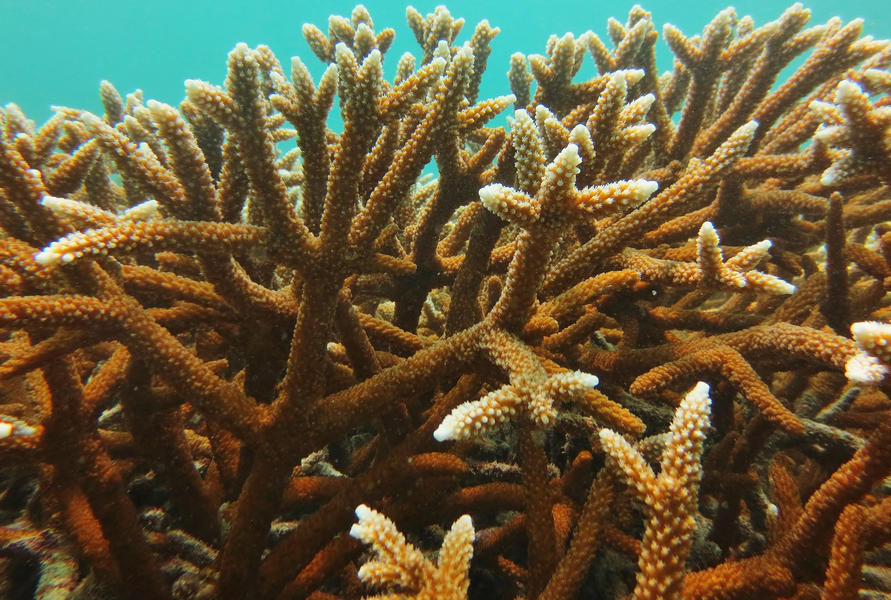
Assessing the effects of sediment sources on coral settlement and recruit survival across multiple Caribbean species

We conducted experimental studies to assess the impact of port- and reef-derived sediments on the settlement success of coral larvae for multiple reef-building species (Acropora palmata, Diplora labyrinthiformis, Orbicella faveolata, and Pseudodiploria strigosa). Sediment from both sources affected larval settlement similarly with no statistical difference between them. Burial under 2 mm of sediment decreased settlement probability to 25% or less, and 4 mm suppressed settlement entirely. Species listed under the Endangered Species Act (A. palmata, and O. faveolata) were the most susceptible to sediment burial regardless of sediment source. Furthermore, we assessed the lethal and sublethal effects of sediment burial on the survivorship of O. faveolata fragments over ten days. Regardless of sediment source and depth, photosynthetic yield across all coral size classes declined by 55% after two days of burial and by 74% after four days. The smallest O. faveolata fragments (1 cm2) began to die after 4 days of burial, and larger fragments that began to die later on: 2.3 cm2 4 cm2 fragments began to die after 6 and 8 days of burial, respectively. The dredging of port channels and beach renourishment projects can produce sediment layers 0.5–10 cm thick, yet 0.2 cm was enough to cause drastic decreases in larval settlement and recruit survival. Our results underscore the importance of burial duration and recruit size on determining coral survivorship. Sedimentation has a strong potential for reducing or completely inhibiting coral recruitment and post-settlement growth, reflecting the urgent need to identify the main sedimentary sources on reefs to limit future declines in reef-habitat quality. Our data provide an essential tool for managers to assess the impacts of future sedimentation events on the juvenile assemblages of reef-building species, mitigate their future loss, and maximize future coral recovery.