

Ground-truthing and Selection of Florida’s Coral Reef Restoration & Recovery (FCR3) Initiative’s Restoration Sites

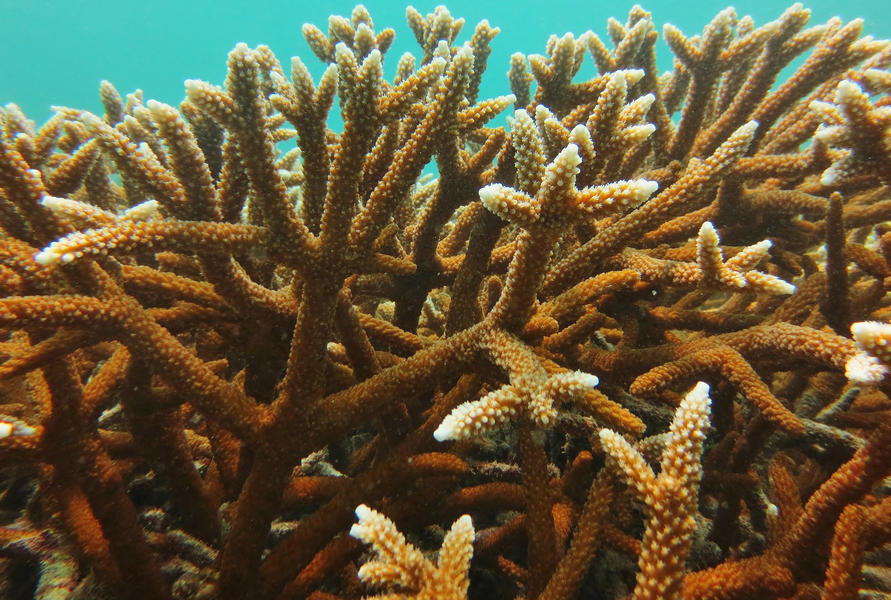
Florida’s Coral Reef (FCR) has seen significant coral population declines due to a combination of global, regional, and local factors. In conjunction with reducing stressors, restoration is required for the recovery of the coral populations. Governor DeSantis directed the establishment of Florida's Coral Reef Restoration and Recovery (FCR3) Initiative in 2023 with Executive Order 23-06 to support the long-term recovery of FCR by 2050. In FY 25-26, we used environmental and ecological data to select the best 25% of Tier 1 focal areas for in water ground-truthing. Here, we developed standard operating procedures to capture key ecological and topographic metrics predicted to enhance restoration success and conducted ground-truthing surveys at priority focal areas. We quantified key metrics from these surveys to calculate ranking scores for each priority focal areas and used these to guide recommendations for Tier 3 FCR3 Initiative sites. Ground-truthing surveys were conducted throughout FCR. Coral cover, density and diversity were highest in Monroe County with >20% coral cover at several sites. Comparatively, Martin County had no priority coral species, few adult corals and exceptionally low coral cover, despite having the highest juvenile coral density. Montastraea cavernosa was the most abundant priority species at most sites. Acropora cervicornis was found at most sites in Broward and Miami-Dade counties, at two sites in the Lower Keys and one in Palm Beach. Tier 3 FCR3 initiative sites were recommended for Martin, Palm Beach, Broward and Miami-Dade counties where the data and expert opinion suggest priority species restoration will be most successful. Martin County sites are furthest south of St. Lucie inlet on shallow shoreward ridges. Palm Beach sites are on the outer reef offshore Boynton Beach. Broward sites are on the inner reef offshore Dania Beach and Hollywood/Hallandale. Miami-Dade sites are on the inner reef offshore Sunny Isles and Surfside.