

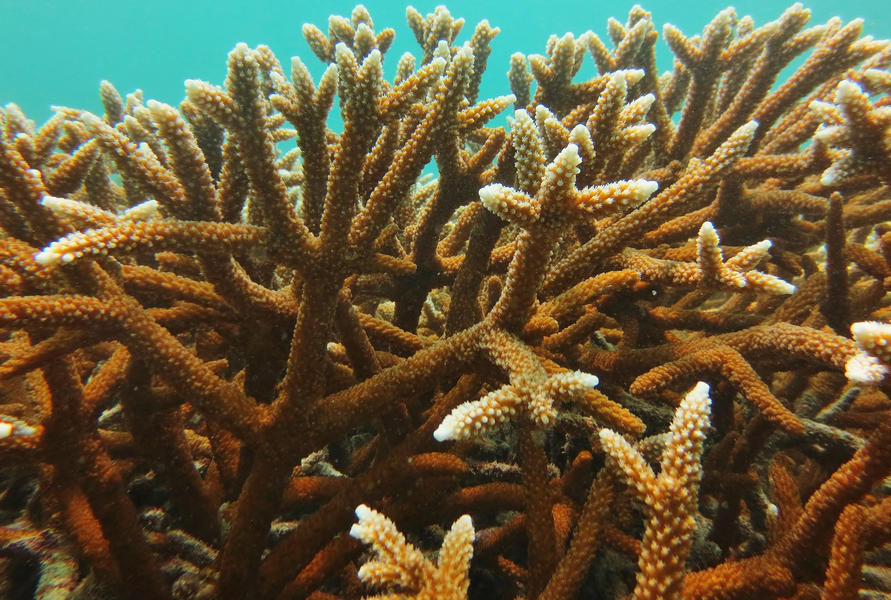
The role of algal symbionts in stony coral tissue loss disease (SCTLD): Comparison with cultured isolates from five different Symbiodiniaceae genera, and role of temperature in disease dynamics

This project tested the hypothesis that algal symbionts might be directly affected by a SCTLD pathogen(s) by exposing cultured symbionts from five Symbiodiniaceae genera (Symbiodinium, Breviolum, Cladocopium, Durusdinium, and Fugacium) to a 9-day controlled SCTLD exposure in the laboratory. They found that cultured algal symbionts can indeed be directly affected by SCLTD, and that different Symbiodiniaceae genera show patterns of differential susceptibility that match those documented in hospite. These findings indicate that algal symbionts, particularly certain taxa in the genus Breviolum, but also members of Cladocopium and Durusdinium (but not Symbiodinium or Fugacium) may be the direct targets of a SCTLD pathogen(s) and suggest that cultured symbionts may be informative model systems for understanding SCTLD, due to the relative ease of maintaining clonal lineages in the laboratory under standard conditions that can be easily replicated for comparative experiments across space and time.