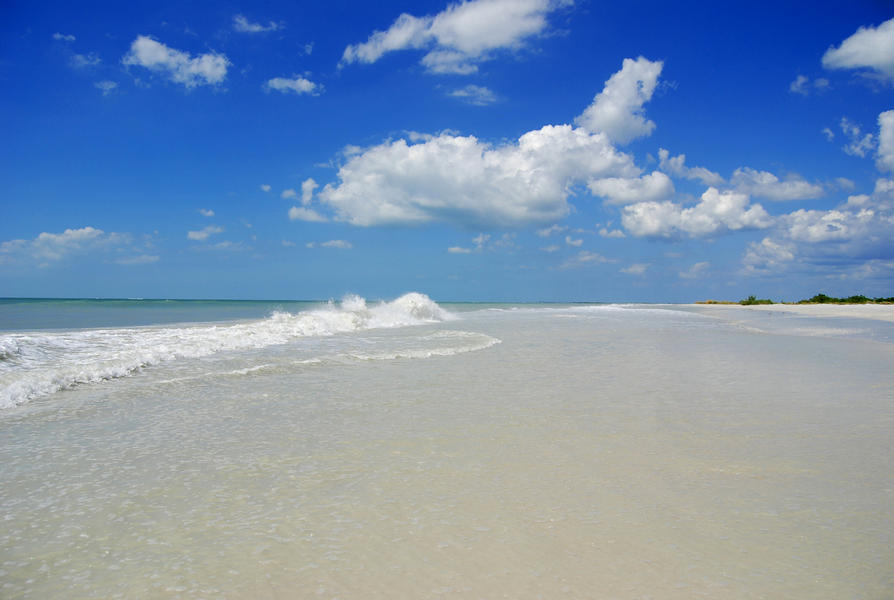
Duval County is jam-packed with beach accesses with 22 miles of coastline. Jacksonville, Duval County's largest and most well-known city, is area wise the largest city in the United States. This county is predominantly urban with a metropolitan atmosphere.
The cities of Neptune Beach, Atlantic Beach and Jacksonville Beach are the main coastal cities along the shoreline. These cities provide an abundance of public beach access along with a multitude of beach-related activities such as surfing, beachside bicycling, fishing, boating and seaside dining. The St. Johns River in the interior of Duval County provides ideal recreation opportunities for boaters and sailors.
Jacksonville's coastline is mainly coastal strands and sandy beaches. Wood storks, eastern indigo snakes, Macgillivray's seaside sparrows and gopher tortoises can be found in Duval County. Within interior portions of the county, along the St. Johns River, manatees can be seen during the winter months.
Archaeological evidence suggests that Duval County was inhabited by indigenous people dating back more than 2,500 years ago. These archaeological excavations can be viewed at Timucuan Ecological and Historic Preserve. Duval County was established in 1822 and has many historic buildings.
Arts and culture are very important aspects of Jacksonville's character. The city has many galleries, museums and live concerts. Since 1979, the Jacksonville Jazz Festival has occurred annually and gathers crowds in the tens of thousands. Jacksonville is also an ideal getaway for travelers who enjoy fine dining.
| Duval at a Glance | |
|---|---|
| Coastal Cities | Atlantic Beach, Neptune Beach, Jacksonville Beach |
| Popular Spot | Jacksonville and Jacksonville Beach |
| Sandy Beaches | 22 miles |
| Public Accesses | 112 |
| Great Florida Birding & Wildlife Trail | 11 sites |
| Federal Lands | Acres |
|---|---|
| Fort Caroline National Monument | 138 |
| Kingsley Plantation | 20 |
| Bays & Inlets |
|---|
| Mayport Basin, Chicopit Bay |
| Rivers & Paddling Trails |
|---|
| St. Johns River, Florida Circumnavigational Saltwater Paddling Trail segment (Jacksonville), Dutton Island Preserve Paddling Trail, Dutton Island Paddling Trail |
The content on the Florida Department of Environmental Protection's (DEP's) website was written and published in English, and English is the sole authoritative language for all such content. As an aid to site visitors who might benefit from multiple language options, the website offers an automated translation feature for browser content in the footer. The translation link will not convert attached or linked files, such as PDFs.
The website translation feature uses Gtranslate® (https://www.drupal.org/project/gtranslate). Gtranslate® is a third-party tool which is not owned, maintained, modified, or controlled in any way by DEP, and which is not endorsed by DEP as preferable to either human-generated translations, or any other automated translation options.
Translation is a nuanced and complex activity and computer-generated translations cannot be expected to be perfectly accurate. Automated translations of this site are not reviewed in advance by DEP and could convey incorrect or offensive language. DEP disclaims any liability for errors, omissions, or interpretive inconsistencies arising in the context of such translation. Site users assume all risk in using translated text. DEP is not responsible for any loss, damage, or harm resulting from reliance on translated text. Use of the translation tool in this website implies understanding and agreement with this assumption and disclaimer.