

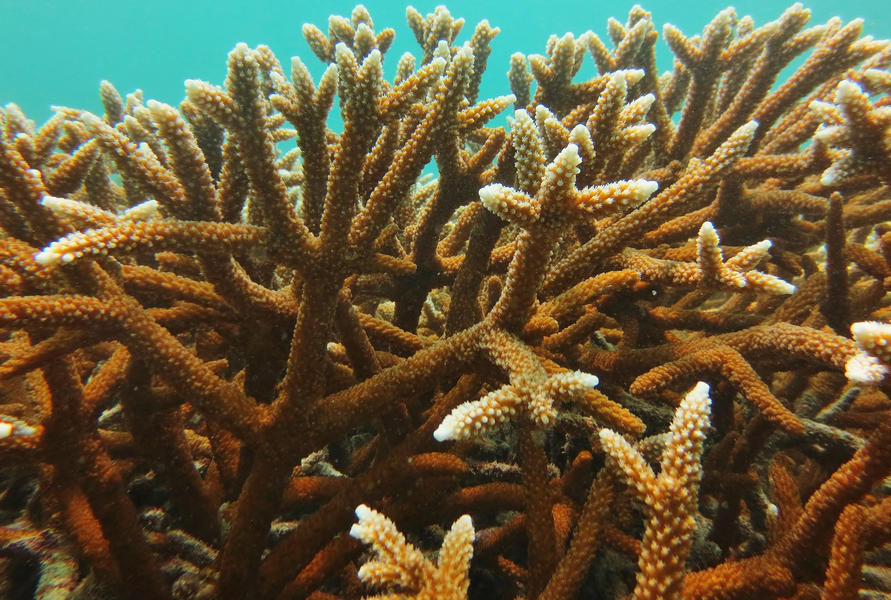
Development of alternative in situ treatments for stony coral tissue loss disease

Florida’s Coral Reef is currently experiencing a multi-year disease-related mortality event that has resulted in massive die-offs in multiple coral species. Approximately 21 species of coral, including both Endangered Species Act-listed and the primary reef-building species, have displayed tissue loss lesions which often result in whole colony mortality. First observed near Virginia Key in late 2014, the disease has since spread to the northernmost extent of Florida’s Coral Reef, and southwest to the Dry Tortugas. The disease outbreak is now continuing to spread throughout the Caribbean. To date, intervention teams have successfully applied pastes with amoxicillin as a treatment for corals with this tissue loss disease, termed stony coral tissue loss disease (STCLD). While this treatment has been effective for slowing or stopping mortality of individual high-priority coral colonies, like most antibiotic treatments, it does not provide lasting protection and corals can be re-infected on another portion of the colony. Additionally, there is no evidence that antibiotics can prevent SCTLD on healthy corals, while the broad-spectrum effects of amoxicillin may disrupt the protective coral microflora (i.e., antibiotic-associated dysbiosis) or lead to antimicrobial resistance. Our research suggests that there may be an alternative to the application of chemicals or antibiotics to treat SCTLD using beneficial microorganisms (probiotics). In healthy corals, the surface mucus layer supports diverse and robust microbial populations that are an order of magnitude more abundant than microbes in the surrounding seawater. The abundant organic carbon available in the surface mucus layer of corals is in stark contrast to the surrounding typically oligotrophic tropical seawater and induces stiff competition between heterotrophic bacteria that feed on the mucus. As such, there is a high selection pressure for coral-associated bacteria to both produce and be resistant to antimicrobial compounds. Marine host-associated bacteria, such as commensals of corals and sponges, have been a rich source of natural products with antimicrobial properties. By using probiotics as alternative in situ treatments for SCTLD, we are thus harnessing the natural production of antimicrobial compounds and other beneficial services from bacteria sourced from healthy Florida corals. The establishment (or restoration) of probiotic strains has the potential to provide a long-lasting protection against this disease. Trials with probiotic intervention treatments in Broward County were promising, but in FY23-24, the intervention treatments applied in Monroe County showed no evidence of effectiveness of either antibiotics or probiotics relative to untreated control corals. The 2023 trials were impacted by extensive coral bleaching that began in late July. The value of the data collected during this project will likely lie in the interpretation of microbiome changes relative to the bleaching event as the dataset spans before, during, and after the bleaching event.