

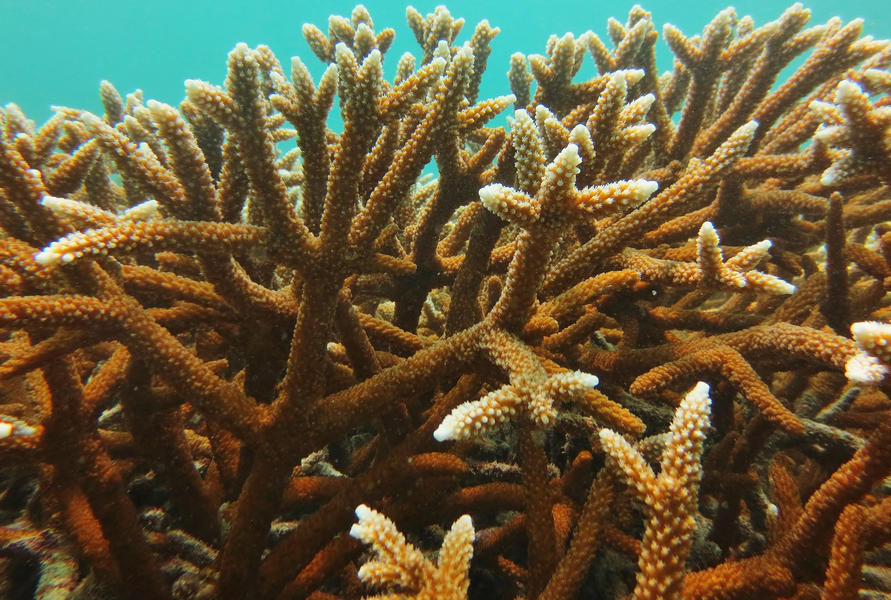
Southeast Florida Coral Reef Evaluation and Monitoring Project

The Southeast Florida coral reef ecosystem is offshore a highly urbanized mainland (population > 6 million) influenced by numerous human activity-related local and global stressors. To document changes potentially related to increasing stressors, the Florida Department of Environmental Protection (DEP) working with Florida Fish and Wildlife Conservation Commission (FWC) and Nova Southeastern University (NSU) initiated a long-term annual coral reef monitoring program in 2003 along the Southeast Florida coast. In order to provide continuity in monitoring efforts along all of Florida’s Coral Reef (FCR), the Southeast Florida Coral Reef Evaluation and Monitoring Project (SECREMP) was established as an expansion of the FWC managed Coral Reef Evaluation and Monitoring Project (CREMP) in the Florida Keys. SECREMP provides local, state, and federal resource managers annual reports on the status and condition of the Southeast Florida (Miami-Dade, Broward, Palm Beach, and Martin counties) coral reef system as well as information on temporal changes in resource condition. Survey methods include photographic transects to quantify percent cover of major benthic taxa (stony corals, sponges, octocorals, macroalgae, etc.) and demographic surveys to quantify abundance, size distribution, and overall condition of stony corals, octocorals, and the giant barrel sponge. SECREMP is also a partnership between DEP, FWC, and NSU that facilitates collaboration and knowledge sharing benefiting coral reef ecosystems nationwide.
The Southeast Florida Coral Reef Ecosystem Conservation Area (Coral ECA) experienced significant stony coral assemblage declines across the study period, with significant losses determined for all stony coral metrics examined (cover, Live Tissue Area (LTA), and density). These losses were predominately driven by a significant increase in Stony Coral Tissue Loss Disease (SCTLD), which peaked in 2016 but has subsequently decreased in prevalence every year since. As regional disease prevalence has dropped to < 1% in 2018, 2019, and 2020, total loss from this event can begin to be quantified, and recovery can start to be addressed. No significant decline in stony coral LTA or density was identified from 2018 through 2020, and density in 2020 was significantly higher than all previous years. However, from 2015-2018, those species susceptible to SCTLD lost >50% of regional LTA, while low susceptible species did not experience any significant change in LTA. This shift in species contribution to the stony coral assemblage could have a lasting impact as recovery begins to occur. Although the majority of SCTLD susceptible species had juvenile colonies in the sample sites, these juveniles were dominated by generalist, low relief species. It does not appear this disease event has had any significant impact on the octocoral and barrel sponge, Xestospongia muta, communities.
The chronic nature of disturbances to and the significant economic value of the coral reefs within the Southeast Florida Coral Reef Ecosystem Conservation Area requires comprehensive, long-term monitoring to define and quantify change and to help identify threats to the ecosystem. Both continual region-wide monitoring (i.e., SECREMP) and improved incident-specific monitoring are necessary if resource managers are to develop sound management plans for coral reefs that allow continued use and realization of the economic value of these fragile marine ecosystems. The value for a long-term region-wide monitoring program is highlighted by the information in this report, which will be vital in planning and monitoring the potential future recovery of this resource.