

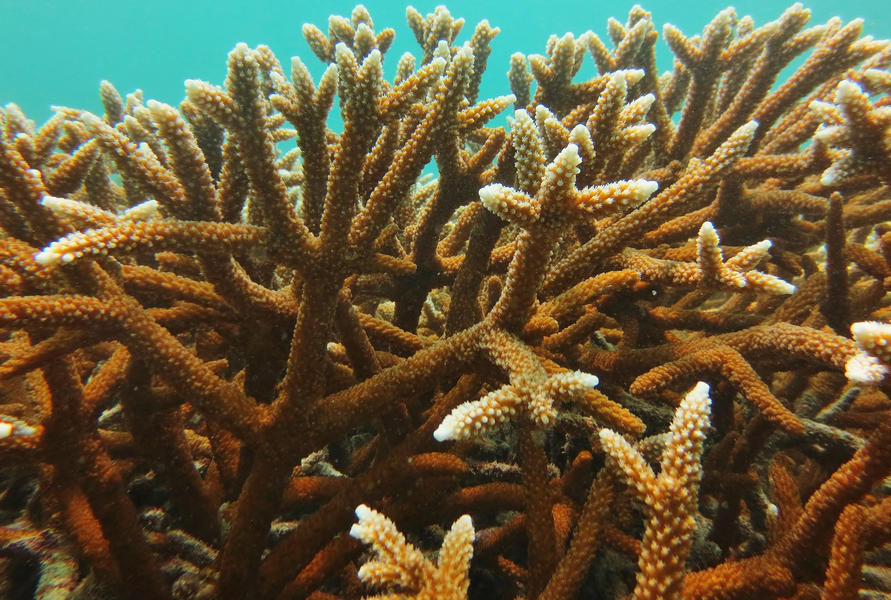
FY24 Activities of the Southeast Florida Coral Reef Restoration Hub

Over the past several decades, coral reefs in Florida and the wider Caribbean have suffered tremendous declines in coral abundance and diversity. The Southeast Florida Coral Reef Restoration Hub was created with the overall goal of reversing these declines in Florida and brings together the restoration activities of coral restoration partners in order to better coordinate science-driven restoration activities and help train the next generation of coral reef restoration practitioners. The Hub consists of seven partners (the University of Miami Rosenstiel School, Nova Southeastern University, The Florida Aquarium, SECORE International, the Phillip and Patricia Frost Museum of Science, The Reef Institute, and the Smithsonian Marine Station) in five counties (Miami-Dade, Broward, Palm Beach, St. Lucie, and Hillsborough).
In FY24, activities focused on translating recent research in coral reproduction, land-based propagation, and coral outplanting to increase the recovery potential of Florida’s coral populations. New generations of sexually produced corals are needed to replace colonies that have been lost, but natural recruitment to Florida reefs has largely failed in recent decades. As such, assisted reproduction accompanied by juvenile rearing and outplanting is necessary to introduce new genetic diversity to Florida’s Coral Reef and facilitate population recovery. At the same time, asexual fragmentation of existing corals can also be exploited to help increase coral cover and also help large colonies recover lost tissue. Activities included infrastructural improvements to the outdoor coral propagation facilities at the University of Miami’s Experimental Hatchery, including a new ozonation system to pre-treat all incoming seawater and facilitate a switch to largely recirculating, rather than open (running seawater), systems (Task 2). Field- and land-based studies of the effect of short-term feeding improvements on early growth of recruits were also undertaken (Task 3), as were field-based studies of nursery acclimation and predation deterrents on the survival of juveniles outplanted to the reef (Task 4). The value of probiotics in enhancing recruit survivorship on the reef was also investigated with trials on one candidate (Pseudoalteromonas sp. CNAT2-18.1, that has shown promise in slowing the progression of stony coral tissue loss disease in adult corals), found to be safe to apply to early coral recruits after settlement (Task 7). Progress on establishing a new in-water nursery mid-way between existing nurseries in Broward and Miami-Dade Counties was also made, and is currently pending permitting. In addition, the importance of various site characteristics such as distance from shore, distance from Port Everglades, sediment depth, and rugosity, on the success of thousands of outplanted corals in Broward County was also investigated (Task 5), as was the success of using microfragmentation to help re-skin some of South Florida’s largest and oldest remaining colonies (Task 6). QA/QC and reporting for all of these activities were established and executed (Task 1).
Finally, this project funded 6-month internships for eleven Master’s degree-level interns in FY24 across the Hub partners (as well as the first month of new internships for an additional ten FY25 interns). The goal of the internship program is to help train the next generation of restoration practitioners and establish career-long relationships among the FY24 cohort, while also strengthening links across the partners to help coordinate research and restoration activities.