

Fossil Collection
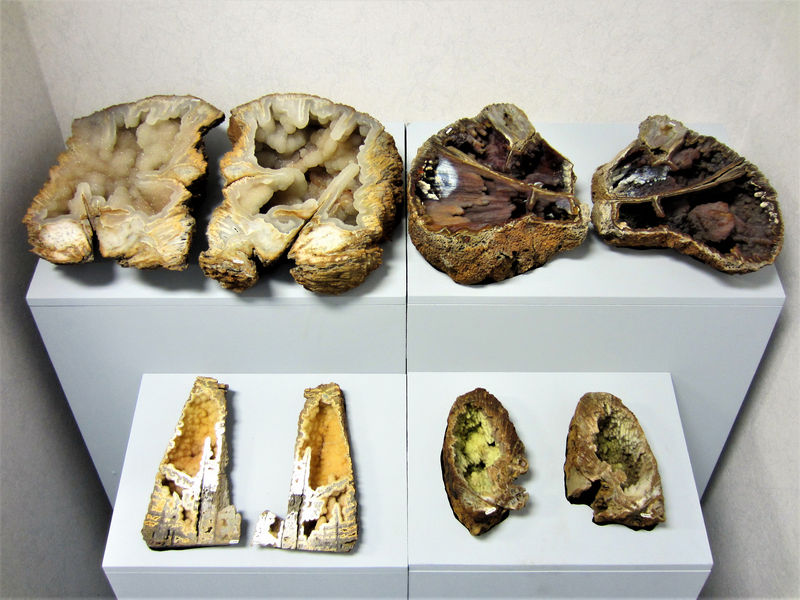
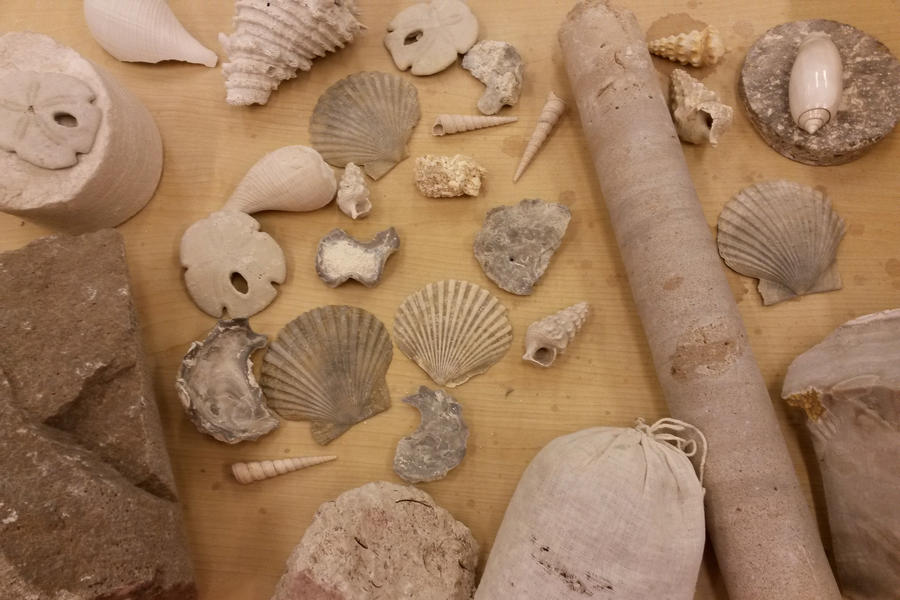
FGS staff have collected and preserved thousands of fossil specimens over the past century. Fossils exposed within rocks and sediments at or near the land surface range from 45-million-year-old "sand dollars" to bones and teeth from the "Ice Age" saber-tooth cat. Our in-house collections include a variety of fossilized shells, echinoids and agatized coral, the official state stone of Florida. Our larger fossils include a complete Miocene dugong (sea cow) skeleton, Megalodon teeth and whale and dolphin vertebrae. We also have a full-size replica of an extinct mako shark jaw containing fossil teeth. Terrestrial vertebrate fossils on display include mammoth, mastodon and gomphothere teeth and tusks. Jaws, osteoderms and leg bones from various species are exhibited, as well as the claw core from a sloth and a sculpture of the skeleton of Waller’s Terror Bird.
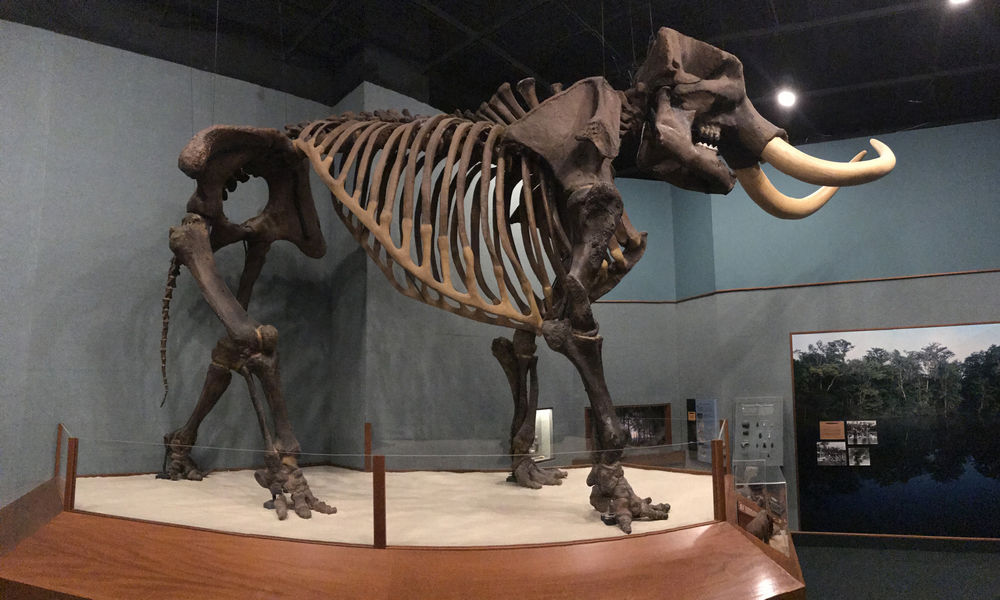
The Florida Museum of Natural History (FLMNH) Paleontological Collections, located in Gainesville, host the bulk of the FGS fossils. The combined Vertebrate Fossil Collection consists of about 22,000 mammals, reptiles, birds, amphibians and fish - almost all of which were collected in Florida. In addition to the fossil vertebrate collection, the FLMNH Invertebrate Paleontology Collection has close to 600,000 lots representing around 6.5 million individual specimens of fossil mollusks, arthropods, corals, bryozoans, echinoderms and foraminifera. Information about these specimens can be found in the FLMNH Invertebrate Paleontology Collection Interactive GIS Database. At the Museum of Florida History in Tallahassee, visitors can view "Herman," a mastodon skeleton recovered by FGS staff in 1930 from the depths of Wakulla Springs. Former State Geologist Herman Gunter wrote about the collection of “Herman” in articles published in Florida Woods and Waters and Florida Highways.
The select specimens in the Walter Schmidt Museum are available by appointment only.
We are open Monday-Friday, 8 a.m.- 5 p.m. (EST).
Offices are closed for all state of Florida holidays.
For more information concerning the FGS fossil collections, please
email FGSCollections@FloridaDEP.gov
or call 1-850-617-0342.
If you are interested in collecting fossils in Florida, see our "Florida Fossil Collecting" page for more information concerning fossil types and permitting.