

SEAFAN - The Southeast Florida Action Network
Report a Marine Incident! | Are you a BleachWatch Observer? | Have you seen a tagged coral? |
|---|---|---|
SEAFANCall the SEAFAN hotline at 866-770-SEFL (7335) or | BleachWatchIf you are a trained BleachWatch observer to detect and monitor coral bleaching and disease in Southeast Florida. | Divers and snorkelers on Florida's Coral Reef can assist in monitoring the effectiveness of experimental treatments on diseased corals. Image
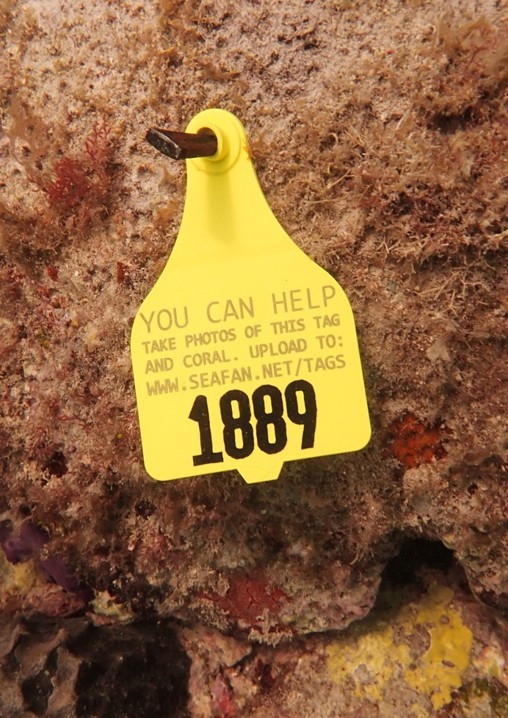
Submit a report to the Citizen Science Photo Submission Form. |
SEAFAN - The Southeast Florida Action Network
The Southeast Florida Action Network (SEAFAN) is a community-driven reporting and response system dedicated to protecting Florida’s Coral Reef. By acting as the “eyes and ears” on the water, community scientists help to provide early detection of harmful marine disturbances and encourage rapid response by the appropriate agencies and organizations.
The SEAFAN program encompasses all of Florida’s Coral Reef, including the Kristin Jacobs Coral Aquatic Preserve and Florida Keys National Marine Sanctuary.
What Should Be Reported?
No special training is needed. If you see something unusual, just report what, when and where the incident was observed through the report form or by calling the hotline at 866-770-SEFL (7335).
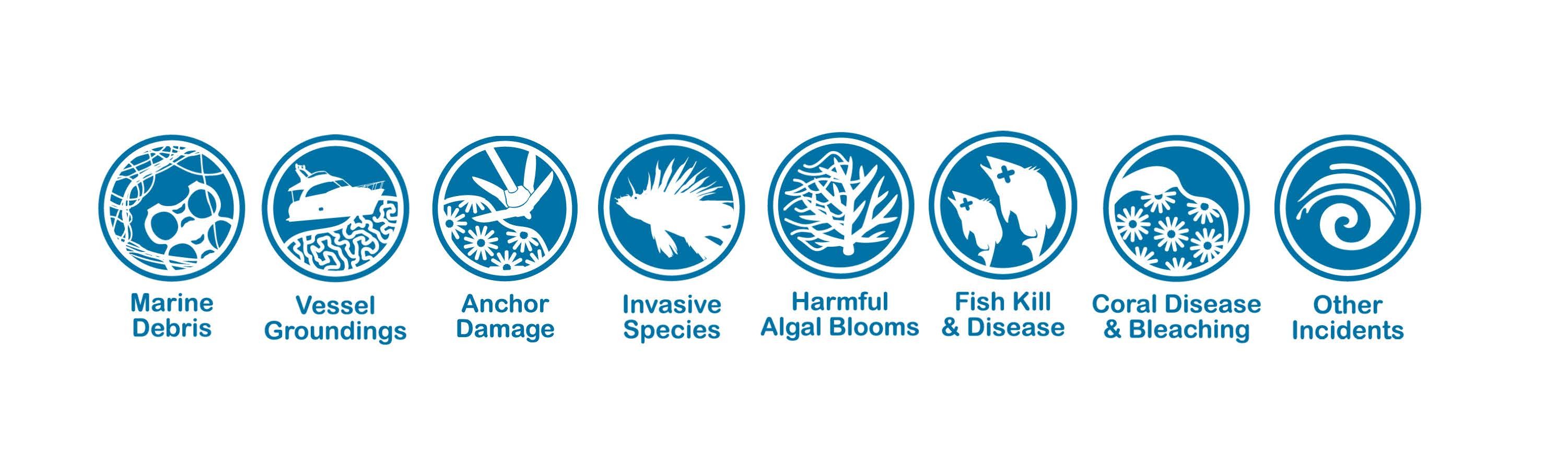
Report any marine incident including marine debris, vessel groundings/anchor damage, invasive species, algal blooms, fish disease/fish kills, discolored watered water, derelict traps/trap debris, coral disease and bleaching.
For real time conditions, check and report beach conditions (weather and surf conditions, tides, crowds, debris, drift algae, jellyfish and more) on Mote Marine Laboratory & Aquarium’s Beach Conditions Reporting System (BCRS) at VisitBeaches.org or on the BCRS app for smartphones.
How Does it Work?
There are three separate programs, each of which is designed to reduce a unique threat to Southeast Florida's coral reefs: Marine Debris Reporting and Removal Program; BleachWatch Program; and Reef Injury Prevention and Response Program (RIPR).
Once a report is received through the online form or hotline, it is logged into a comprehensive marine incident database, and the marine incident is evaluated. When appropriate, a response is coordinated based on the type of marine incident and information is shared with local partners.
- If necessary, vessel grounding or anchor damage reports are followed by a site assessment to determine the presence and extent of reef injuries. Response efforts include outreach to the responsible parties in order to reduce the likelihood of a repeat occurrence and, in some cases, mitigation activities to restore the damaged or lost resources.
- Reports of possible biological events (e.g., fish disease and fish kills; harmful algal blooms; coral disease and bleaching; invasive species; discolored water) are tracked to determine the spatial extent and duration of the incident. DEP staff distributes information and coordinates with regional partners to schedule initial site assessments and implement response protocols when necessary.
Who Can Be Involved?
Everyone! Whether you are a diver, snorkeler, commercial or recreational angler, boater, law enforcement personnel, environmental professional, or beachgoer, you are welcome to become part of the SEAFAN Observer Network.
SEAFAN Newsletters
- Year 1 SEAFAN newsletter (2022)
- Year 2 SEAFAN newsletter (2023)
Check out the SEAFAN flyer, which you can download, print and share at your convenience.
For more information or to schedule an informational class, please email Coral@floridadep.gov.