

Estero Bay Rookery Monitoring and Protection
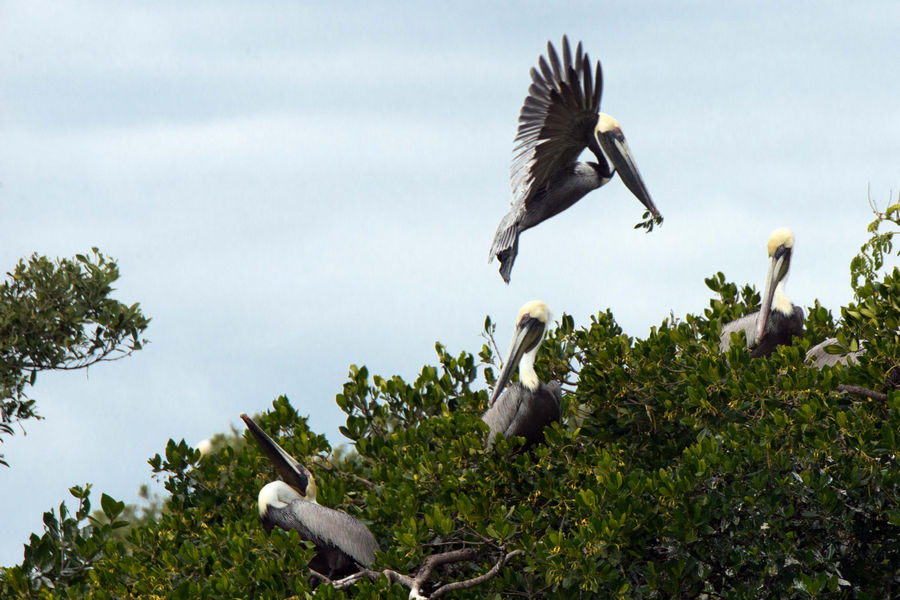
Volunteers play an integral role in the Rookery Monitoring and Protection Program at Estero Bay Aquatic Preserve. They help conduct nest count surveys, record data and - with proper training - captain the boat. Regardless of bird-watching experience, this is a great opportunity to learn! The data that volunteers collect are published and used to make management decisions within the bay and across the state.
Methods
Once a month, volunteers conduct perimeter surveys of 25 islands throughout Estero Bay from a 17-foot Boston Whaler. Primary and secondary observers count active nests while the captain slowly circles each island. The recorder tracks all nests called out by the primary and secondary observers. Survey counts indicate the number and nesting status of active nests. Nests are grouped into three categories: “incubating,” if the adult is in an incubating posture or if eggs are visible; “chick,” if a chick or chicks are present at or near the nest and are still being cared for by an adult; or “unknown,” if an adult is present at the nest but no eggs or chicks are visible, if the pair is copulating or if adults are observed presenting sticks for nest building. Birds not on nests are not recorded; nests with multiple chicks are recorded as one nest. The average of the two observers’ counts is reported.
How Do I Sign Up?
Training is provided to volunteers onsite on the day of the survey. Surveys take approximately six hours. If you would like to participate in the Rookery Monitoring and Protection program, please call 239-530-1003. Please notify staff of cancellations as soon as possible. If surveys must be canceled due to weather or other unforeseen circumstances, volunteers will be contacted as soon as possible with details and backup dates.
What to Pack and Where to Meet:
Please bring bottled water, food, binoculars, sunscreen and rain gear. The boat leaves from one of two launch sites:
- Estero Bay: 700-1 Fisherman’s Wharf, Fort Myers Beach, FL 33931 (located on San Carlos Island)
- Lover’s Key: 8700 Estero Blvd, Bonita Springs, FL 34134 (located on the east side of the road across from the main entrance to Lovers Key State Park)