

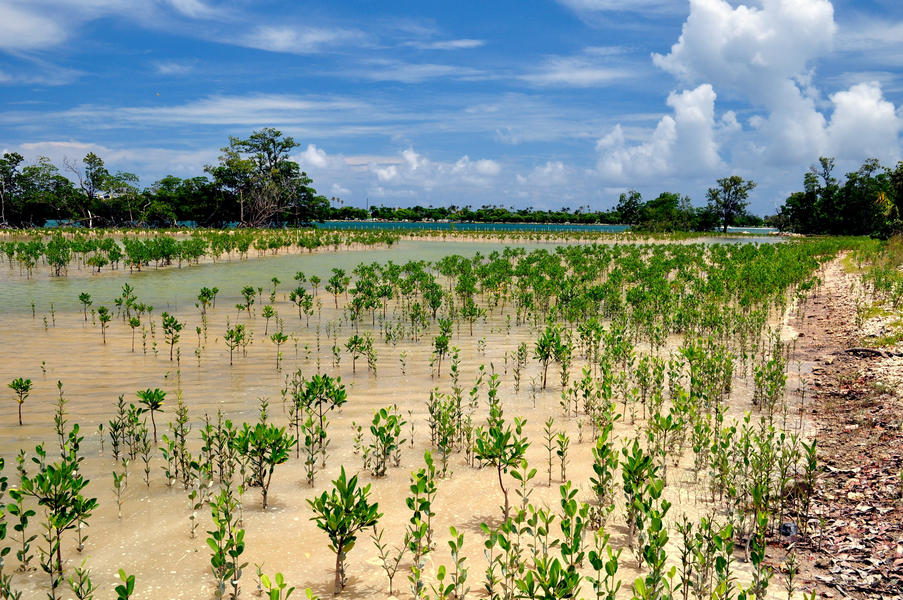
Seagrass Monitoring in Charlotte Harbor Aquatic Preserves
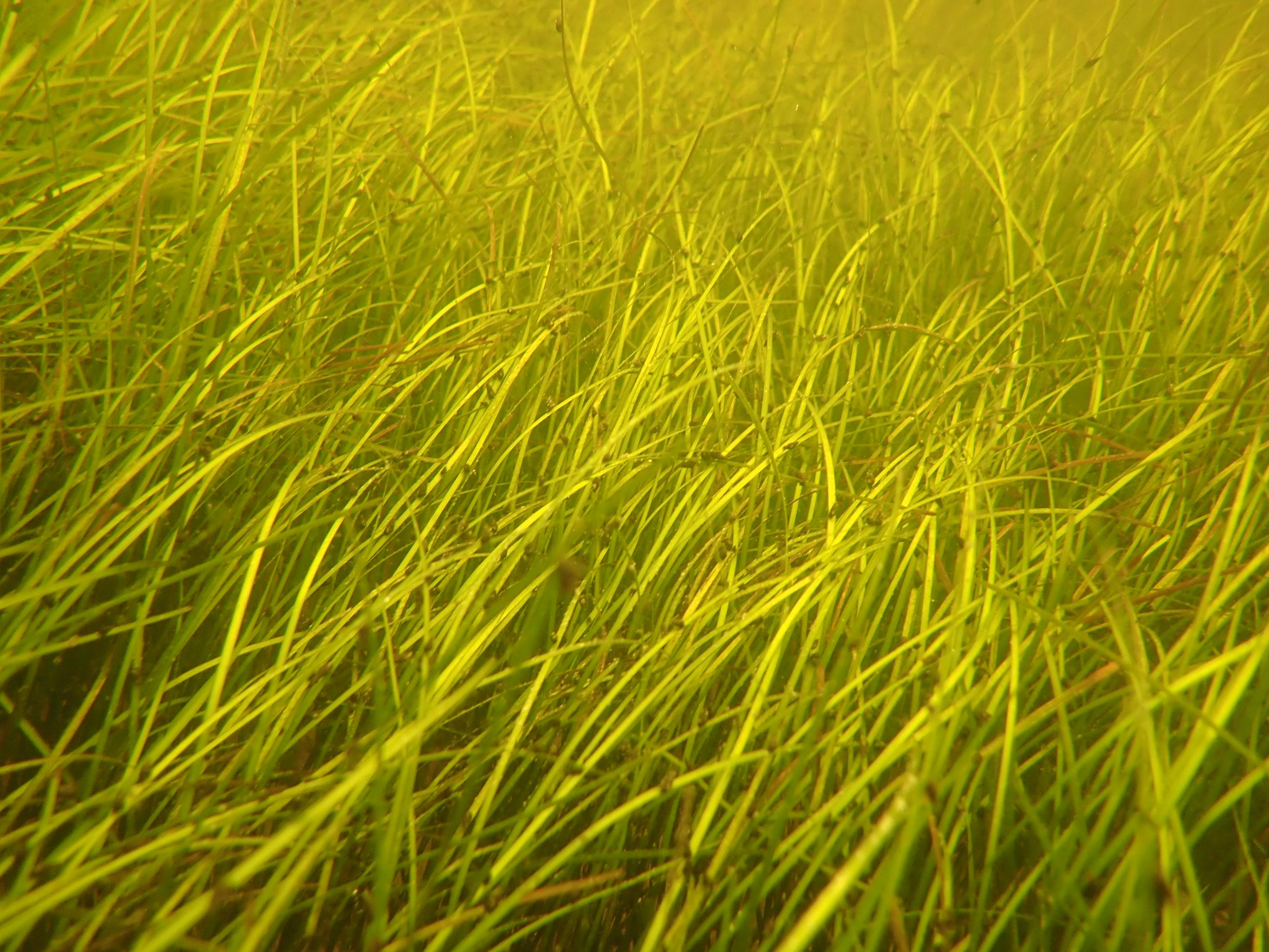
Seagrass is a submerged habitat that serves as an indicator of estuary health. Seagrasses provide primary food sources as well as shelter, spawning and nursery habitat to a great diversity of aquatic organisms. They also reduce turbidity, facilitate sediment stabilization and aid in nutrient cycling. Seagrass health depends on good water clarity and quality. Changes in water quality, hydrology and salinity directly affect seagrass distribution, abundance and diversity.
Annual seagrass monitoring was established in 1999 at 50 transect sites throughout the Charlotte Harbor Aquatic Preserves to characterize conditions and record trends. Data is collected just after the growing season (August-October), starting from the shoreline to the deep edge of seagrass beds to determine species type, abundance, shoot density, blade lengths, maximum depth and sediment type. With help from research partners and the use of aerial photography, the seagrass data is examined for changes over time and by aquatic preserve. The results are presented regularly at scientific conferences and have been published in Florida Scientist and Florida Fish and Wildlife Conservation Commission's Seagrass Integrated Mapping and Monitoring reports.
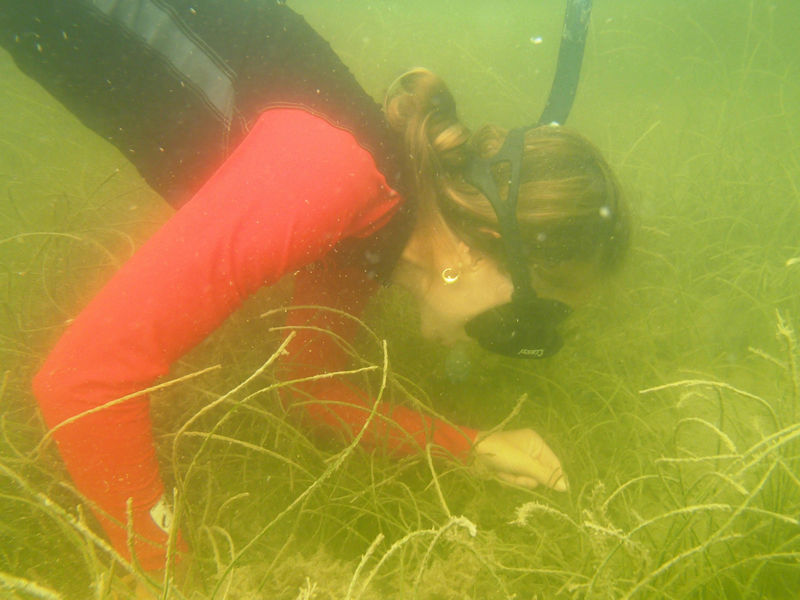
Overall, seagrasses appear to be relatively healthy and stable throughout the Charlotte Harbor Aquatic Preserves, although there had been estuary-specific declines in some years that were associated with natural events like hurricanes and stronger than average rainy seasons. Healthy seagrass beds support fisheries and the local economy, as 80 percent of commercially and recreationally important fish and shellfish depend on seagrass habitat at one point in their life cycle.