

Yellow River Marsh Aquatic Preserve - Addressing Habitat Loss
Aquatic-Preserve Quick links
- Alligator Harbor Aquatic Preserve
- Apalachicola Bay Aquatic Preserve
- Banana River Aquatic Preserve
- Big Bend Seagrasses Aquatic Preserve
- Biscayne Bay Aquatic Preserves
- Boca Ciega Bay Aquatic Preserve
- Cape Haze Aquatic Preserve
- Cape Romano-Ten Thousand Islands Aquatic Preserve
- Cockroach Bay Aquatic Preserve
- Coupon Bight Aquatic Preserve
- Estero Bay Aquatic Preserve
- Fort Pickens Aquatic Preserve
- Gasparilla Sound-Charlotte Harbor Aquatic Preserve
- Guana River Marsh Aquatic Preserve
- Indian River-Malabar to Vero Beach Aquatic Preserve
- Indian River-Vero Beach to Fort Pierce Aquatic Preserve
- Jensen Beach to Jupiter Inlet Aquatic Preserve
- Kristin Jacobs Coral Aquatic Preserve
- Lake Jackson Aquatic Preserve
- Lemon Bay Aquatic Preserve
- Lignumvitae Key Aquatic Preserve
- Loxahatchee River-Lake Worth Creek Aquatic Preserve
- Matlacha Pass Aquatic Preserve
- Mosquito Lagoon Aquatic Preserve
- Nassau River-St. Johns River Marshes and Fort Clinch Aquatic Preserves
- Nature Coast Aquatic Preserve
- North Fork, St. Lucie Aquatic Preserve
- Oklawaha River Aquatic Preserve
- Pellicer Creek Aquatic Preserve
- Pine Island Sound Aquatic Preserve
- Pinellas County Aquatic Preserves
- Rainbow Springs Aquatic Preserve
- Rocky Bayou Aquatic Preserve
- Rookery Bay Aquatic Preserve
- St. Andrews Aquatic Preserve
- St. Joseph Bay Aquatic Preserve
- St. Martins Marsh Aquatic Preserve
- Terra Ceia Aquatic Preserve
- Tomoka Marsh Aquatic Preserve
- Wekiva River Aquatic Preserve
- Yellow River Marsh Aquatic Preserve
- All Aquatic-Preserve content
Most of lands surrounding Yellow River Marsh Aquatic Preserve are state and federally owned conservation lands. However, the aquatic preserve is still experiencing a gradual decline in estuarine habitat, partly due to water quality and sedimentation. Staff have several strategies to deal with these issues.
A project to restore oyster reefs within the aquatic preserve using recycled or fossilized oyster shells began the spring of 2016. Yellow River Marsh Aquatic Preserve will partner with the UF/IFAS Santa Rosa County Sea Grant office to monitor biological recruitment of the restored oyster reefs. Santa Rosa County schoolchildren will learn about the monitoring, learning scientific techniques and water quality criteria.
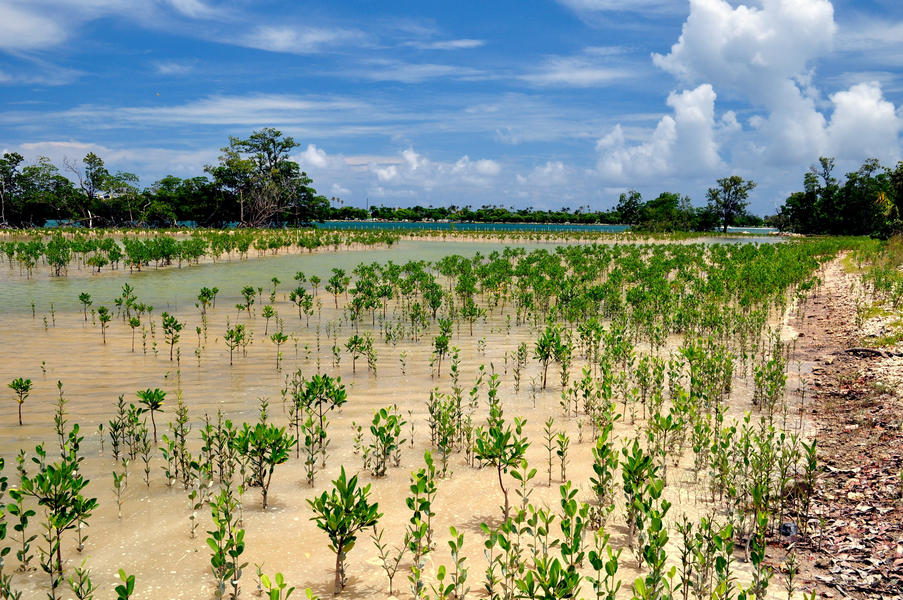
There are numerous shorelines throughout the aquatic preserve that have been impacted by storm activity and erosion. Many efforts have been undertaken to protect these shorelines, from installing salt marsh vegetation, the use of recycled or fossilized oyster shell to limestone-encrusted concrete discs. The success of these will be determined over upcoming years with annual monitoring.
Staff is currently wrapping up a living shoreline project on the western boundary, along 1,200 linear feet which features lime rock breakwaters and saltmarsh vegetation. Another location has been identified just to the south of this where a similar type restoration project will be implemented. Staff are working to identify additional sites that would be appropriate for habitat restoration and enhancement projects. Ideal projects would include salt marsh, oyster and seagrass projects. As a part of that effort, staff are working to map benthic habitats in the aquatic preserve.